In 2015 Gaziantep joined the UNESCO Creative Cities Network in the field of gastronomy. To understand why, you don't need to wait for dinner; the day starts deliciously at breakfast. In Antep, breakfast is more than a meal. It is a habit that sets the rhythm of the city from the early hours.
Home-style breakfast: the essentials
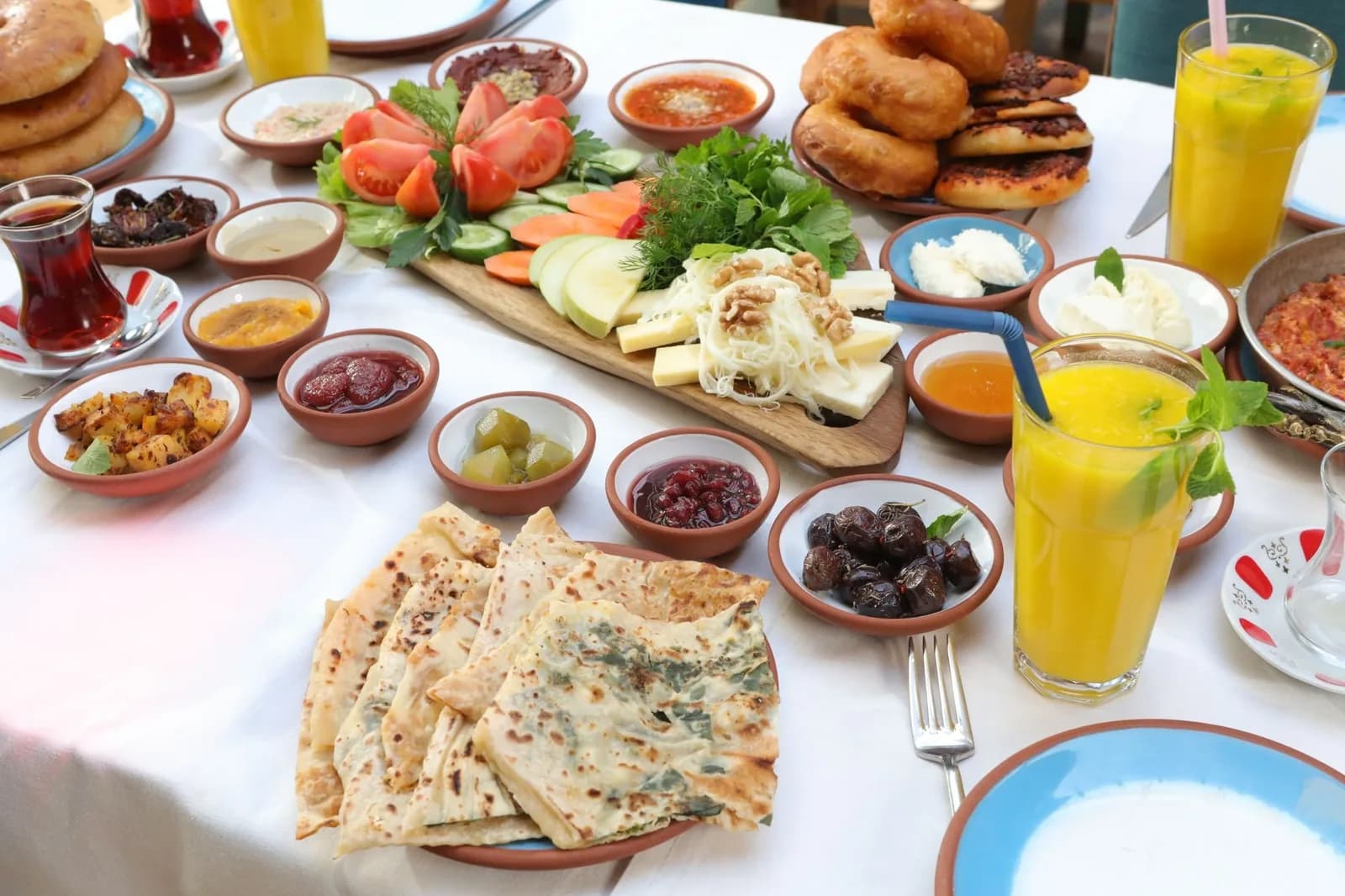
Sit down to a home breakfast in Antep and you will find a few familiar dishes alongside some distinctly local ones.
Antep cheese
Antep cheese is a firm white cheese cured in brine and a staple of the breakfast table. It is often made with nigella seeds and is usually soaked in water for a while before serving to reduce the salt.
Zahter
Made by drying wild thyme and mixing it with sesame, sumac and other spices, zahter is one of the signature flavours of an Antep breakfast. The most common way to eat it is to dip bread in olive oil and then into the zahter. In season, fresh zahter is also served as a salad.
Red pepper paste and isot
Red pepper paste, a cornerstone of southeastern Turkish cooking, is spread on bread or mixed with olive oil at breakfast. Dried chilli flakes, known as isot, are always on the table too.
Olives, olive oil and seasonal vegetables
Regional olives and olive oil, tomatoes, cucumbers, greens and fresh mint complete the spread, together with a glass of strong black tea.
The sweet side: kaymak, honey and molasses
Clotted cream (kaymak) with honey is loved in Antep as everywhere in Turkey. Grape molasses and tahini are warming companions on winter mornings, and dried sweets such as walnut sucuk and fruit leather sometimes join the table.
Breakfast dishes unique to Antep
What sets Gaziantep apart are the morning dishes that live in its streets and in the hands of its masters.
Katmer
The dish most associated with Antep mornings is katmer. Paper-thin pastry is filled with kaymak, pistachios and sugar, then served hot, usually early in the morning for an energetic start. Tradition has it that katmer was brought to newlyweds on the morning after their wedding.
Beyran
Beyran is a soup of lamb, rice, garlic and chilli, served piping hot in copper bowls. Soup for breakfast may sound surprising at first, but in Gaziantep beyran is a favourite especially in the morning. Rich and spicy, it sets you up for the day.
Morning liver kebab
Eating liver kebab early in the morning is another common habit in Gaziantep. Liver skewers grilled over charcoal are served with flatbread, onion, parsley and isot.
After breakfast: menengiç coffee
The Antep way to finish breakfast is a cup of menengiç coffee. Made from the fruit of the menengiç tree, a type of wild pistachio, it contains no caffeine and, when cooked with milk, has a smooth, slightly rich taste. Drinking it in one of the old coffee houses of the historic bazaar area makes it even more special.
A few tips for an Antep breakfast
- Take your time. Breakfast in Antep is long, and conversation is part of it.
- Eat katmer hot. Once it cools, it loses much of its charm.
- Save room for beyran. It is very filling and hard to manage after a big breakfast.
- Mind the season. Fresh zahter, greens and some vegetables appear only in season.
Starting the day at the mansion
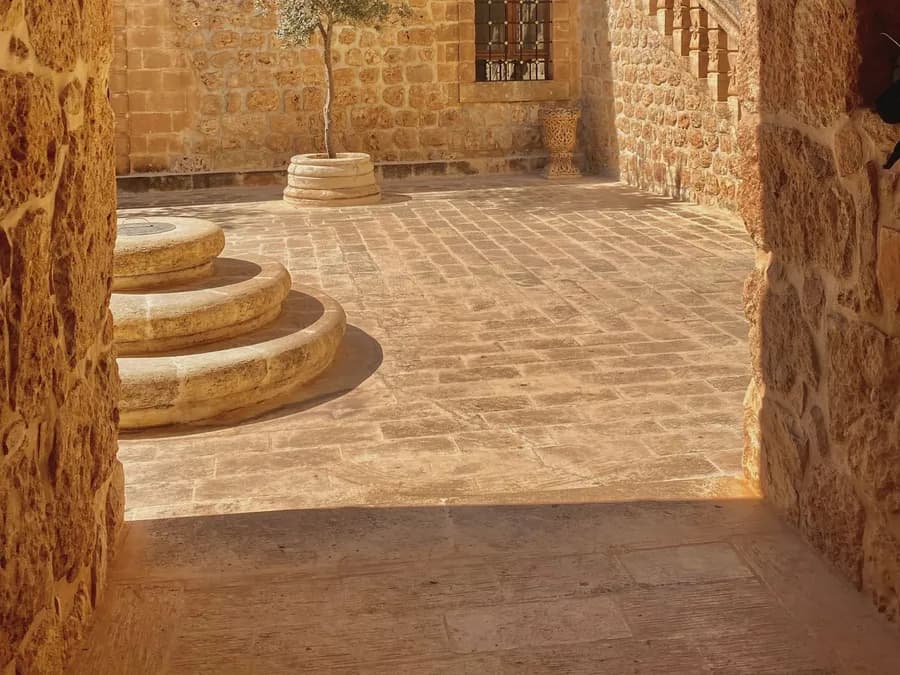
One of the nicest ways to enjoy an Antep breakfast is in a historic courtyard. At Dai Konak we prepare our breakfast table with regional cheeses, zahter, red pepper paste, olives, seasonal vegetables and some of Antep's best-loved flavours, and serve it in the courtyard when the weather allows. Afterwards, walking to the bazaars and continuing the day with the city's other flavours is the best part.
For details on rooms and breakfast, browse our rooms or contact us.
Frequently Asked Questions
What is the most famous Gaziantep breakfast dish?
Katmer is the dish most associated with breakfast in Antep. It is made with thin pastry, kaymak, pistachios and sugar, and served hot.
Is beyran eaten for breakfast?
Yes. Beyran, a hot soup of lamb, rice, garlic and chilli, is especially popular in the morning in Gaziantep.
Does menengiç coffee contain caffeine?
No. Menengiç coffee is made from the fruit of the menengiç tree and is caffeine-free. It is usually cooked with milk.