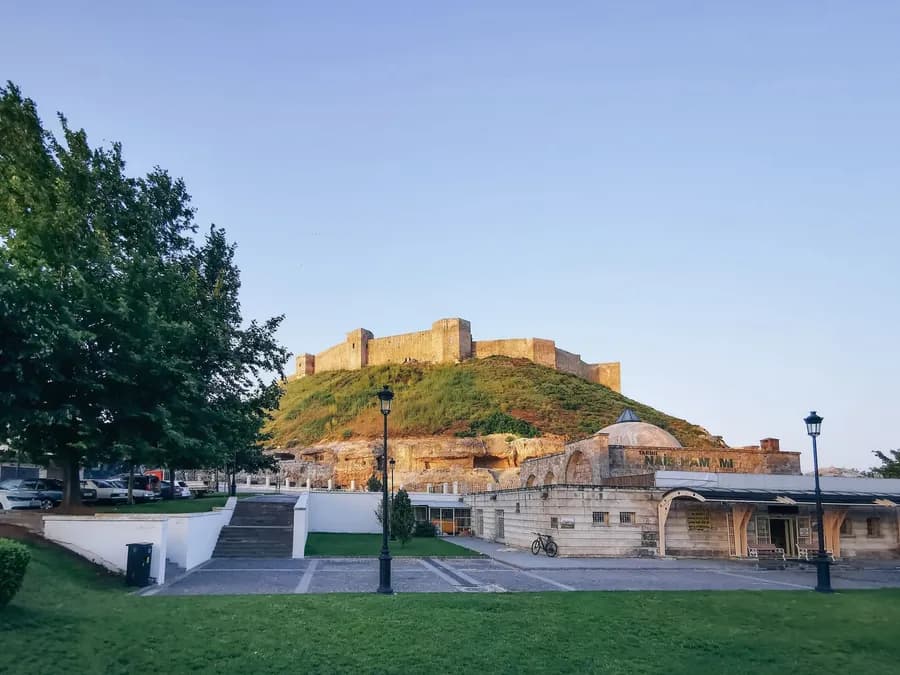
Walking through the old neighbourhoods of Gaziantep, the first thing you notice is the pale stone walls rising on both sides of the street. Plain and rather inward-looking from the outside, these walls often hide airy, lively homes arranged around a courtyard. The Antep house is a clever answer to climate, materials and family life.
Closed to the street, open to the courtyard
The street-facing walls of traditional Antep houses are usually tall and built of stone, with only a few windows. There are reasons for this, both climatic and cultural. Thick walls keep out the summer heat and the winter cold, and family life takes place inside, away from the eyes of the street.
Step through the door and the picture changes completely. Rooms, the eyvan and service spaces all open onto a central courtyard. Light, air and life reach the house through it.
The courtyard: heart of the home
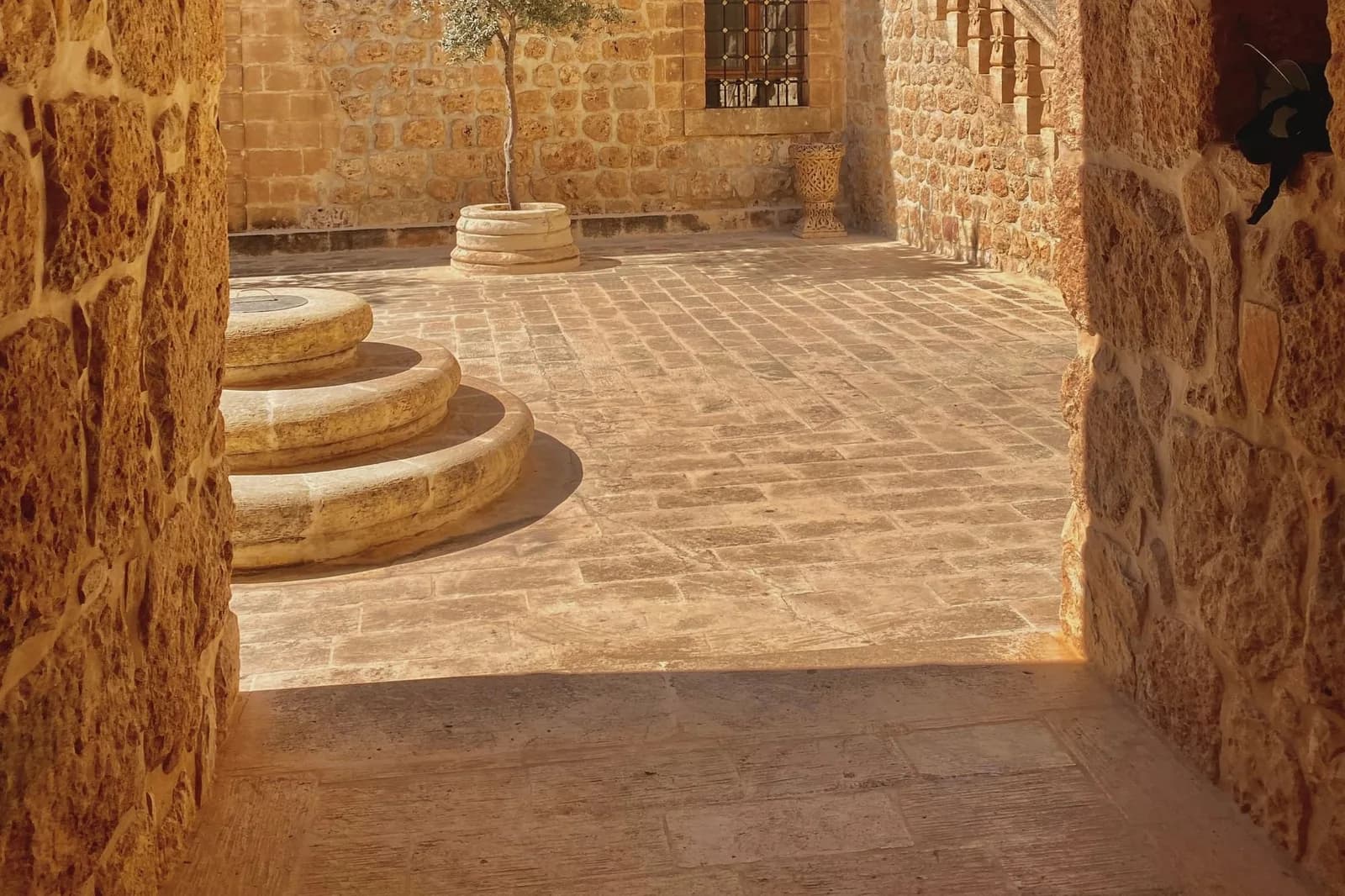
In an Antep house the courtyard is not just a passage; it is the centre of daily life. With its stone paving, often a well or water basin in one corner, potted flowers and a grapevine, the courtyard was where meals were prepared, laundry was done, guests were received and children played.
On summer evenings, the courtyard becomes the coolest part of the house. Splashing water on the stone floor to cool the air is still one of the most effective ways to cope with Gaziantep's hot summers.
The eyvan: three walls and an open arch
The eyvan is a hall enclosed on three sides and fully open to the courtyard on the fourth, usually crowned by a tall arch. Used for centuries in Anatolian and Middle Eastern architecture, it serves as a sitting and resting area in Antep houses, especially in summer.
The eyvan is often oriented according to the sun so that it stays in shade in summer. Sitting in the eyvan and watching the courtyard is the best way to understand how time slows down in an Antep house.
Havara stone and the art of the stonemason
Stone is what gives Gaziantep's historic buildings their character. Havara stone, widely used in the region, is a pale, soft limestone. It is easy to carve when freshly quarried and hardens as it is exposed to air over time. This allowed craftsmen to produce fine work on door and window frames, arches and decorative details.
Alongside havara, builders also used keymık stone, which is harder and darker. Façades combining the two show a contrast in colour and texture that is one of the recognisable features of Antep architecture.
Arches and carved stone
In Antep houses the arch is both a structural element and a decorative one. Eyvan arches, door lintels and window surrounds are often adorned with carefully carved stone. Some houses carry inscriptions above the door with the year of construction or a short prayer.
Wooden ceilings
Wood balances the coolness of the stone. Wooden beams and panels on the ceilings add warmth to the rooms, and in some mansions these ceilings are decorated with painting or carving.
Kabaltı: covered passages
Another feature of Gaziantep's old quarters is the kabaltı, an arched, covered passage that crosses over the street and links two buildings. These passages form some of the most photogenic corners of the old city, and walking beneath one you immediately feel the change in shade and temperature.
From mansions to boutique hotels
In recent years many historic mansions in Gaziantep have been brought back to life through careful restoration. Some have become museums, some restaurants or cafés, and some boutique hotels. This transformation helps protect the buildings and lets visitors get to know the city more closely.
Staying in a historic mansion means living inside an Antep house rather than just looking at one from outside: watching the morning light reach the courtyard, having breakfast by the eyvan, resting in the cool of stone walls in the evening. These are experiences no museum visit can quite offer.
Dai Konak is one of these houses. Dating from 1319, our mansion still carries all of these elements: stone walls, arches, a courtyard and an eyvan. If you are curious about life in a konak, take a look at our rooms or send us a message.
Frequently Asked Questions
What is havara stone?
Havara is a pale, soft limestone widely used around Gaziantep. It is easy to carve and hardens over time as it is exposed to air, which is why it was favoured for decorated arches and window frames.
What is an eyvan in an Antep house?
An eyvan is an arched hall enclosed on three sides and open to the courtyard on the fourth. It is used as a cool, shaded living space, especially in summer.
Can you stay in a historic mansion in Gaziantep?
Yes. Several historic mansions in Gaziantep have been restored and turned into boutique hotels. Dai Konak, with its courtyard and eyvan, is one of them.